
How to Maintain Granite, Quartz, and Marble Countertops in Arizona’s Dry Climate
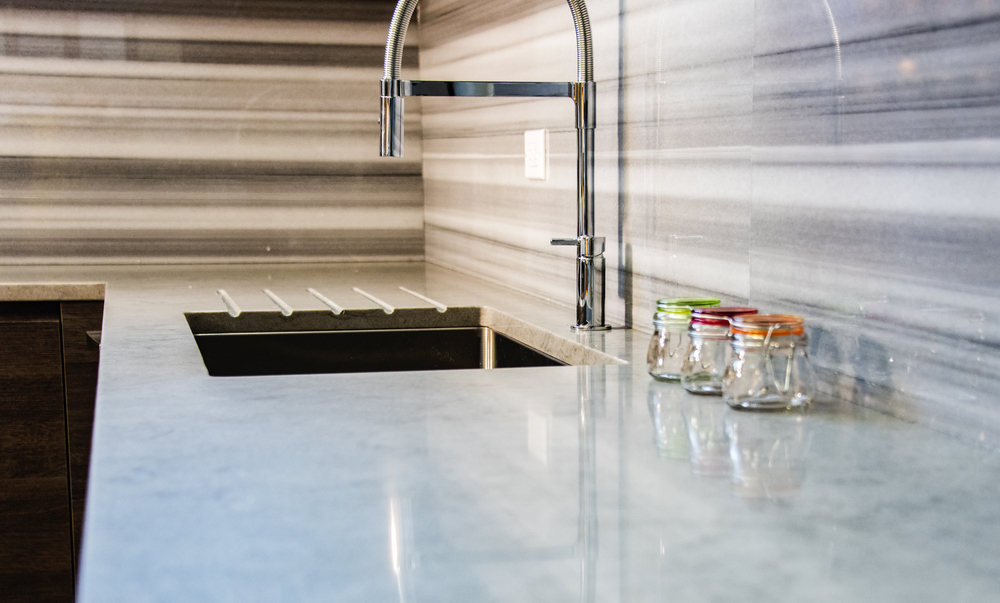
The intense heat, low humidity, and hard water that flows through most homes in the Sonoran Desert region create a unique set of challenges for homeowners who want to keep their countertops looking pristine. Whether you have granite, quartz, or marble surfaces in your kitchen or bathroom, understanding how Arizona’s dry climate affects these materials is the first step toward proper countertop maintenance.
This guide breaks down everything you need to know about caring for your stone surfaces so they stay beautiful for decades to come.
Why Arizona’s Climate Is Hard on Stone Countertops
Most people think of stone as indestructible, and in many ways it is. But the specific conditions found in Arizona create stressors that homeowners in more temperate climates never have to think about.
The desert sun is relentless. Kitchens and bathrooms that receive direct sunlight through windows can experience dramatic temperature swings throughout the day. In the summer, interior surfaces near windows can reach temperatures high enough to accelerate the breakdown of sealants and cause subtle thermal expansion in stone materials. For granite care specifically, repeated heating and cooling cycles can cause the minerals within the stone to shift microscopically over time, potentially weakening the surface integrity if the stone is not properly sealed and maintained.
Hard water is another major concern for countertop maintenance in Mesa, AZ. The water supply in the greater Phoenix metro area is notoriously high in mineral content, particularly calcium and magnesium. When this hard water evaporates on your countertop surface, it leaves behind white mineral deposits that can etch and dull polished stone over time. This is especially damaging to marble, which is a calcium-based stone and reacts chemically with mineral-heavy water.
Low humidity compounds these problems by drying out sealants faster than they would deteriorate in a more humid environment. A sealant that might last two or three years in the Pacific Northwest could break down in as little as twelve months in Arizona.
Granite Countertop Care in a Desert Environment
Granite is one of the most popular countertop materials in Arizona, and for good reason. It is dense, durable, and handles heat relatively well compared to other natural stones. However, granite care in a dry desert climate still requires a consistent and thoughtful routine.
The most important step in maintaining granite countertops in Arizona is sealing them regularly. Because the dry air accelerates sealant breakdown, homeowners in Mesa, AZ, and surrounding areas should test their granite at least once a year. You can do this by placing a few drops of water on the surface and watching what happens. If the water beads up, your sealant is still intact. If it soaks in within a few minutes, it is time to reseal.
Use a high-quality penetrating sealer specifically formulated for granite, and apply it according to the manufacturer’s directions. In Arizona’s climate, most stone care professionals recommend sealing granite countertops every twelve to eighteen months rather than the two-year intervals often suggested in cooler, more humid regions.
For daily countertop maintenance, avoid using harsh chemical cleaners, acidic products, or anything containing bleach or ammonia. These substances strip sealants prematurely and can dull the granite’s natural sheen. Instead, clean your granite surfaces with a soft cloth and a pH-neutral cleaner designed for natural stone. Wipe up spills immediately, particularly anything acidic like lemon juice, vinegar, or wine.
Hard water stains are a persistent issue for granite care in Arizona. To remove mineral deposits without damaging the stone, use a specially formulated hard water remover for natural stone surfaces. Avoid scrubbing with abrasive pads, which can scratch the polished finish.
Quartz Countertop Maintenance in the Arizona Heat
Quartz countertops are engineered stone products made from crushed quartz crystals bound together with polymer resins. This composition makes them non-porous by nature, which is a significant advantage in a hard water environment like Mesa, AZ. Because quartz does not need to be sealed, it eliminates one of the major maintenance concerns associated with natural stone.
However, quartz has its own vulnerabilities when it comes to Arizona’s climate. The polymer resins that bind quartz countertops together are sensitive to prolonged UV exposure and extreme heat. Direct sunlight streaming through a window can cause quartz surfaces to discolor or fade over time, a phenomenon sometimes referred to as UV degradation. In a state like Arizona, where the sun is intense for most of the year, this is a real concern for countertop maintenance.
To protect quartz from UV damage, consider installing UV-filtering window film in rooms where your countertops receive direct sunlight. This small investment can significantly extend the life and appearance of your quartz surfaces.
Heat is also a concern. Despite being durable, quartz can crack or discolor if exposed to sudden extreme heat. Always use trivets or hot pads under pots, pans, and slow cookers. Never place a hot baking dish directly on a quartz surface, especially after it has been sitting in an air-conditioned kitchen, since the temperature differential can cause thermal shock.
For daily countertop maintenance, quartz is straightforward. Wipe surfaces with a soft cloth and mild dish soap or a stone-safe cleaner. Avoid abrasive scrubbers and harsh chemicals, particularly those containing bleach, which can break down the resin binders over time.
Marble Countertop Care in a Dry, Hard Water Region
Marble is the most delicate of the three countertop materials commonly used in Arizona homes, and it requires the most attentive countertop maintenance. Because marble is composed largely of calcium carbonate, it reacts chemically with acids. Even mildly acidic substances like citrus juice, coffee, or tomato sauce can etch the surface, leaving dull spots that are difficult to reverse without professional polishing.
In Mesa, AZ, the hard water problem is particularly severe for marble owners. Calcium-heavy water deposits can actually bond to the calcium carbonate in the marble itself, making mineral buildup harder to remove without causing additional damage. The best prevention is to wipe down marble surfaces immediately after any water contact and to dry them thoroughly rather than letting water evaporate naturally.
Marble should be sealed every six to twelve months in Arizona’s climate, even more frequently than granite. Choose a sealer specifically rated for marble, as some granite sealers are not formulated for the softer calcium-based stone.
For routine marble care, use only pH-neutral cleaners made for natural stone. Never use vinegar, lemon-based products, or general-purpose household sprays. Even some popular natural cleaning solutions that work well on other surfaces can permanently damage marble.
If your marble has already developed etching or dull spots from acid exposure or hard water buildup, consult a professional stone restoration specialist. Many countertop maintenance companies in the Mesa, AZ area offer polishing and honing services that can restore the surface without full replacement.
Building a Year-Round Countertop Maintenance Routine in Arizona
Consistency is the foundation of long-lasting countertops in any climate, but in Arizona, the stakes are higher. The combination of intense heat, hard water, UV exposure, and dry air means that neglecting your countertops even for one season can accelerate visible deterioration.
Create a simple schedule for yourself. Test granite sealant annually and reseal as needed. Check marble sealant twice a year. Inspect quartz surfaces quarterly for any signs of discoloration or UV fading. Clean all surfaces daily with appropriate, stone-safe products. Address hard water deposits weekly before they have a chance to build up and cause lasting damage.
Investing in a water softener is one of the most impactful things an Arizona homeowner can do to protect all types of stone countertops. By reducing the mineral content of your tap water, you dramatically cut down on hard water etching and staining across granite, quartz, and marble alike.
Conclusion
Countertop maintenance in Arizona requires a little more effort than it does in other parts of the country, but the payoff is well worth it. By understanding how the dry climate, hard water, and intense sun affect granite, quartz, and marble differently, homeowners in Mesa, AZ, and throughout Arizona can take targeted steps to protect their investment. Seal regularly, clean gently, and address problems early. Your countertops will stay beautiful for years to come.
Need Natural Countertops and Flooring Near You?
With over ten years of experience, we take pride in fabricating and installing high quality granite countertops for custom homes, remodels, and commercial spaces, combining competitive pricing with skilled craftsmanship and advanced techniques to bring your vision to life. Whether you are updating a kitchen, enhancing a bathroom, or planning a large scale project, we offer beautiful and durable options in marble, quartz, and granite that add lasting value and style. Our team is committed to delivering results that reflect both precision and care, ensuring every detail meets your expectations. Contact us today to discuss your project and see how we can create the perfect countertop solution for your space.